Why snoozing feels impossible to resist
For the first minutes after you wake, your brain isn't fully online. Sleep researchers call this sleep inertia: you're groggy, slow and bad at decisions, and it's strongest when an alarm pulls you out of deep sleep. That's the version of you deciding whether to hit snooze.
Snooze also pays off instantly. Nine more minutes in a warm bed feels great now, and the cost (a rushed, foggy morning) arrives later. Brains are bad at that trade even when they're fully awake.
What snoozing actually does to your morning
Each snooze lets you drift back towards sleep, then pulls you out again. Instead of waking up once, you wake up four or five times, and those short dozes are too broken to be real rest. Many people find they feel groggier after a run of snoozes than if they'd got up on the first alarm.
It also eats time. Five snoozes of nine minutes is 45 minutes you could have slept straight through by setting the alarm later, or spent on the morning you planned.
1. Find out why you're snoozing
Snoozing is usually a symptom. The common causes are too little sleep, a wake-up time that changes every day, and an alarm that's too easy to silence. Fix the cause and the habit gets much easier to break.
2. Go to bed early enough
No trick beats a short night. Work back from your wake-up time and set a realistic bedtime. If you need to shift earlier, move in small steps, like 15 minutes every few days.
3. Keep the same wake-up time every day
A wake-up time that jumps around between weekdays and weekends makes every Monday feel like jet lag. Keep it as steady as you can, days off included.
4. Decide the night before
At 6 AM your brain is bad at decisions, so make them at night. Lay out your clothes, set up the coffee, and know exactly what the first ten minutes will look like.
5. Make getting up the only way to stop the alarm
Putting your phone across the room works until you learn to walk over, silence it and get back into bed. An alarm that needs a task works better. A Wekup mission alarm has no snooze button: to stop it you do push-ups, photograph an item in another room, solve three sums or read a verse aloud. By the time it's quiet, you're up.
6. Get light and movement early
Open the curtains, switch on the light or step outside, and move a little. Light and movement both tell your body the day has started.
7. Track your mornings
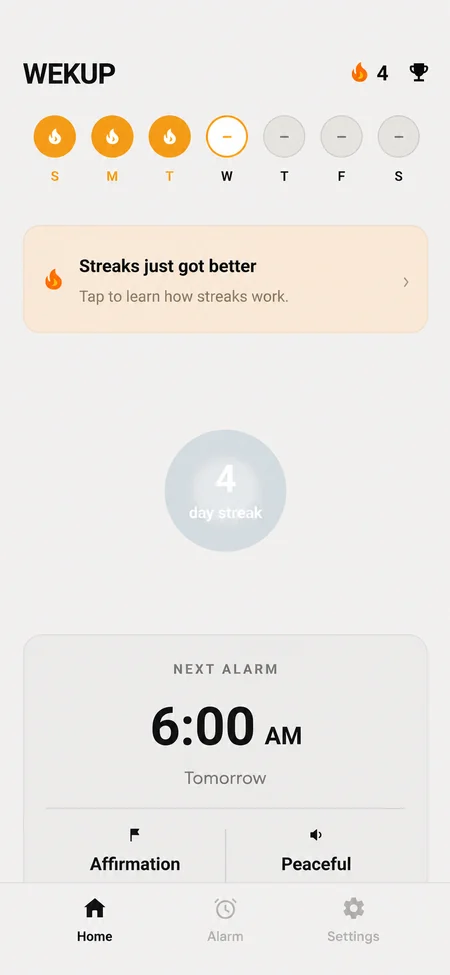
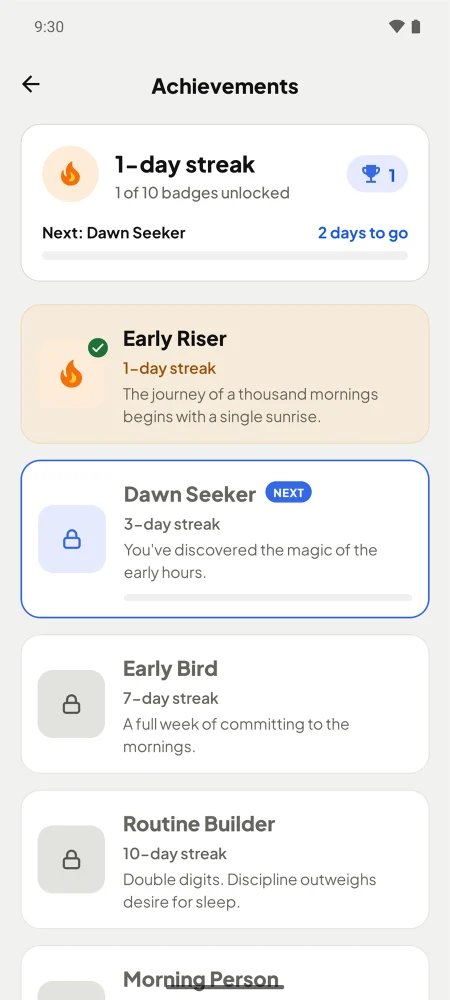
It's easy to remember the good mornings and forget the rest. Wekup keeps a streak and a history of every alarm, including the ones you didn't complete, so you can see the real pattern.
8. Set one alarm, not five
A stack of alarms ten minutes apart teaches you that the first one doesn't count. Set one alarm for the time you actually need to get up. If you want a safety net, make the backup harder to ignore than the first, not easier.
9. Give yourself a reason to get up
Mornings with nothing in them are easy to sleep through. Put something you look forward to in the first half hour: a proper coffee, a walk, a podcast, ten quiet minutes before anyone else is up.
A two-week plan to break the snooze habit
Days 1–3: pick your time
Choose one wake-up time you can keep every day and a bedtime that gives you enough sleep. Delete the extra alarms.
Days 4–7: remove the snooze
Move the alarm out of reach or use an alarm with no snooze button. Lay out what you need for the first ten minutes the night before.
Days 8–14: protect the streak
Keep the same time on days off too. Count the mornings you were up on the first alarm, and look at what the missed ones had in common.
When to talk to a doctor
If you're getting enough sleep and still can't wake up, or you feel exhausted all day, talk to a doctor. Ongoing sleepiness can have medical causes that no alarm will fix.
By the Wekup team · Updated November 16, 2026