Why you feel groggy when you wake up
The fog of the first minutes after waking is called sleep inertia. It's normal and it passes, but it's heavier when you're short on sleep, when an alarm drags you out of deep sleep, and when you wake up several times in a row by snoozing.
1. Keep a steady schedule
Your body gets better at waking when it knows when to expect it. Same bedtime, same wake-up time, every day. Sleeping in two hours on Saturday makes Monday feel like jet lag.
2. Stop snoozing
Every snooze starts the waking-up process again. Set one alarm for the time you'll really get up, and make sure it can't be silenced without getting up.
3. Get light in the first few minutes
Open the curtains or step outside. Daylight is one of the strongest signals your body uses to switch into day mode. On dark winter mornings, switch on bright lights.
4. Drink water and move
A glass of water and a minute of movement, like push-ups, stretching or a walk to the kitchen, both help you feel awake faster than lying in bed scrolling.
5. Use your brain early
A small task that needs attention, like a few sums or reading something aloud, speeds up the switch from sleep mode to awake mode.
Let your alarm do steps 2, 4 and 5
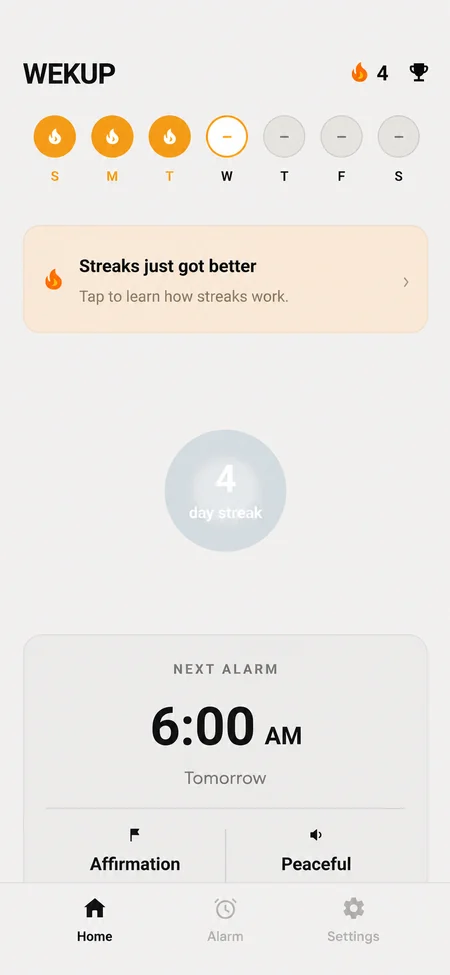
Wekup's mission alarms have no snooze button and only stop after a short task: push-ups, finding and photographing an item, three math problems, or reading an affirmation or Bible verse aloud. By the time the alarm stops, you've moved or thought your way past the worst of the fog.
When tiredness doesn't go away
If you feel exhausted most mornings despite enough sleep, or sleepy all day, talk to a doctor. Persistent tiredness can have medical causes.
By the Wekup team · Updated November 16, 2026