1. Work out your bedtime first
Most adults need around 7 to 9 hours of sleep. For a 5 AM wake-up, that means asleep somewhere between 8 and 10 PM. If that bedtime isn't realistic for you yet, 5 AM isn't either. Fix the night first.
2. Move 15 minutes earlier every few days
Jumping from 7:30 to 5:00 overnight rarely lasts. Move your alarm and your bedtime 15 minutes earlier every two or three days. In two to three weeks you're there, and your body has adjusted with you.
3. Get bright light straight away
Light tells your body clock it's morning. Switch on the brightest light you have, open the curtains, or step outside for a few minutes. Avoid bright screens late at night for the same reason.
4. Decide why you're getting up
"Wake up at 5" isn't a reason. "Study chapter 4", "go for a run" or "an hour on my side project" is. Write the first task down the night before so there's nothing to decide at 5 AM.
5. Remove the snooze button
At 5 AM your sleepy brain will always vote for nine more minutes. Take that choice away. Use one alarm with no snooze that you have to do something to switch off.
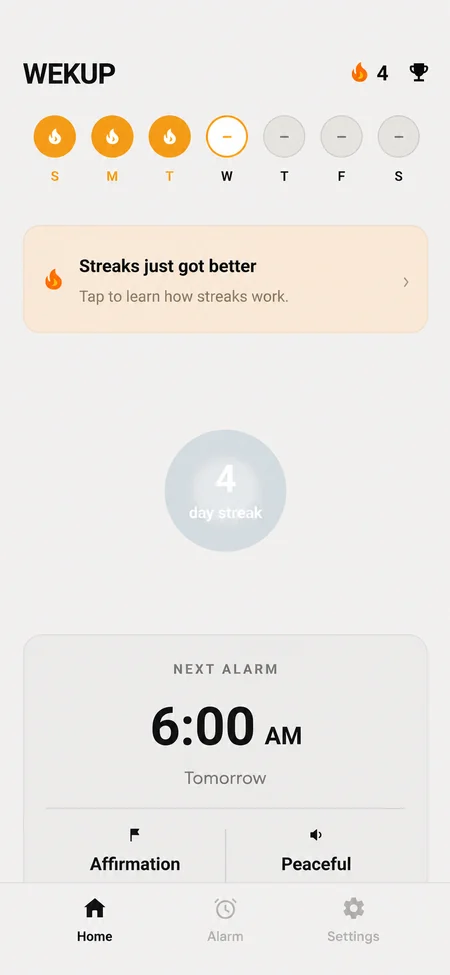
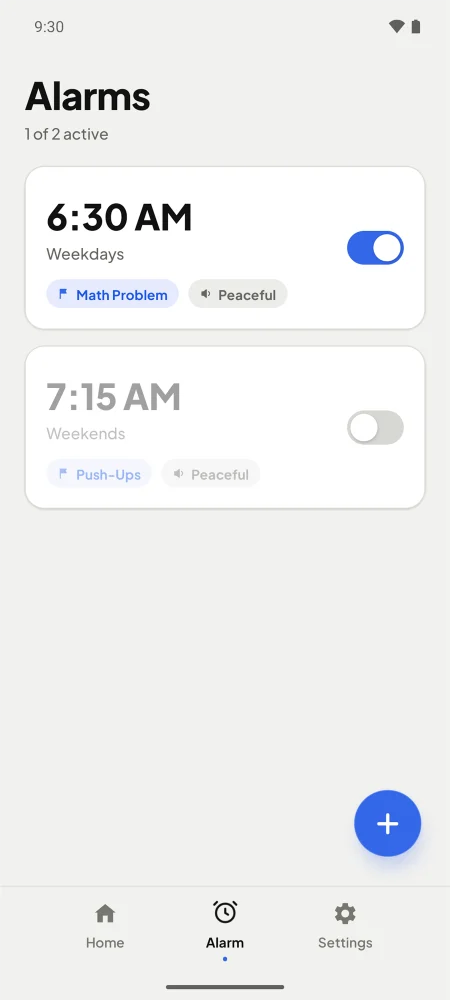
With Wekup, a mission alarm has no snooze or dismiss button. Solve three math problems, do push-ups or find an item in another room before it stops.
6. Keep weekends close
Sleeping until 10 on Saturday undoes the week. Keep weekends within an hour of your weekday time. In Wekup each alarm has its own days, so you can set 5:00 on weekdays and 6:00 on weekends.
A first week plan
Days 1–3
Alarm 15 minutes earlier than now. Bedtime 15 minutes earlier too.
Days 4–6
Another 15 minutes earlier. Write tomorrow's first task before bed.
Day 7
Check how you feel. If you're tired in the afternoon, slow down instead of pushing on.
Keep going in 15-minute steps until you reach 5:00. Use a no-snooze alarm from day one.
By the Wekup team · Updated November 20, 2026