1. Don't steal the hours from sleep
Waking up at 5 AM after going to bed at 2 AM doesn't give you extra study time. It gives you a tired morning and a worse memory for what you studied. Sleep helps your brain hold on to what you learned the day before, so cutting it before exams works against you.
Decide your wake-up time, count back the hours of sleep you need, and treat that bedtime as part of your study plan.
2. Move your alarm earlier in small steps
If you normally wake at 7:30, jumping straight to 5:00 rarely lasts. Move 15 to 30 minutes earlier every few days, and move your bedtime with it. Start a couple of weeks before exams, not the night before.
3. Decide what you'll study the night before
At 5 AM, "What should I study?" is the question that sends you back to bed. Write the first task on a sticky note before you sleep: the chapter, the problem set, the pages. Leave the book open on the desk.
4. Make the alarm impossible to ignore half-asleep
Most students who plan to study early lose to the snooze button, not to the material. Use one alarm with no snooze, and make switching it off take real effort.
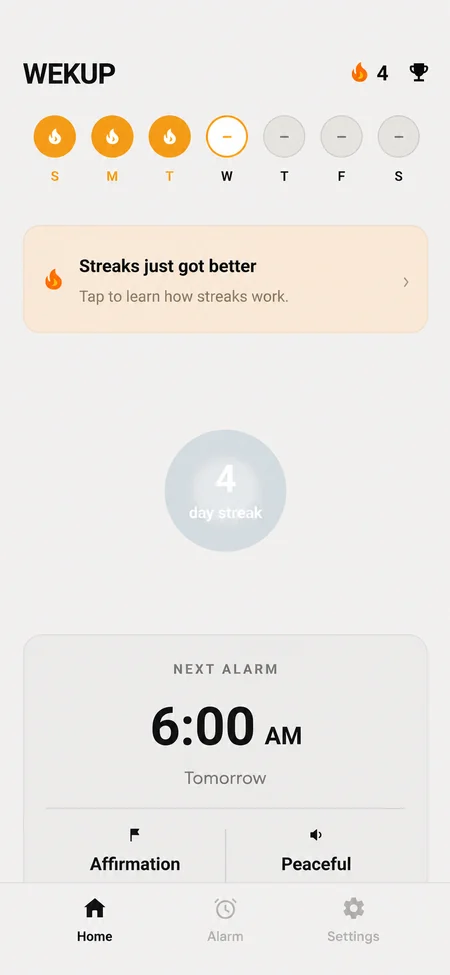
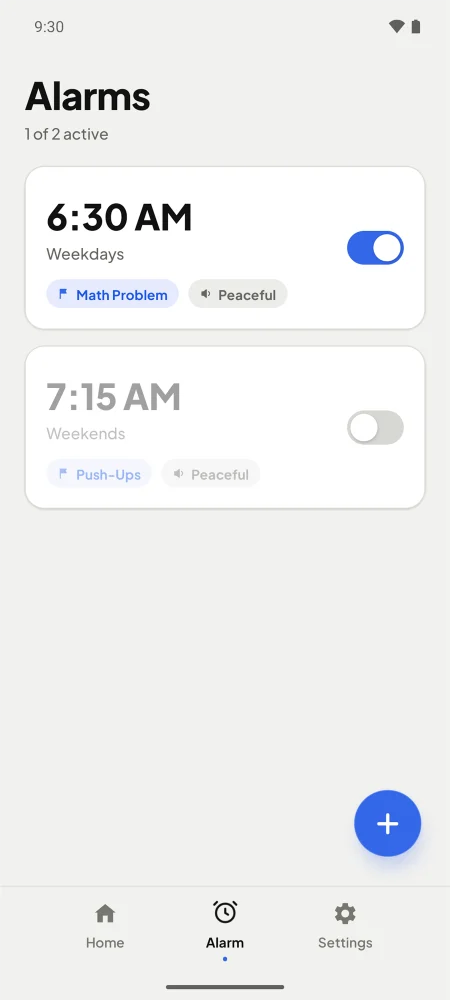
With Wekup, a mission alarm has no snooze or dismiss button. The Math Problem mission makes you solve three sums before it stops, which also warms your brain up for studying. If you fall back asleep after math, use Push-Ups or Item Search instead, which get you out of bed.
5. Study somewhere other than your bed
Studying under the blanket is the fastest way back to sleep. Get up, switch on a bright light, wash your face and sit at a desk or table. Bright light and being upright both help you feel awake.
6. Start with something active
The first half hour is when you're slowest. Start with practice questions, problems or writing out answers from memory rather than quietly re-reading notes. Active work keeps your brain switched on.
7. Plan short breaks, not naps
Study in blocks of 25 to 50 minutes with a 5 to 10 minute break. Stand up, drink water, step outside. Lying down "for five minutes" is how a study morning turns into a lost one.
8. Keep the same time on most days
Waking at 5 on weekdays and 10 on weekends resets your body clock every week. Keep weekends close to your study time. With Wekup each alarm has its own days, time, sound and mission, so you can set a study alarm for exam weeks and a slightly later one for days off.
A sample early study morning
5:00
Alarm rings. Finish the mission to switch it off: you're already up.
5:05
Light on, face washed, glass of water. Sit at the desk, not on the bed.
5:10
First study block on the task you wrote down last night. Active work: problems or recall.
5:50
Short break. Stand, stretch, step outside if you can.
6:00
Second block, then breakfast before school or college.
Adjust the times to your schedule. What matters is that the first ten minutes are decided before you go to sleep.
By the Wekup team · Updated November 16, 2026